A Commercial Driver’s License opens the door to a rewarding career in the trucking and transportation industry. As demand for qualified commercial drivers continues to grow, many people are exploring how to earn a CDL and start working in this essential field. Before beginning the licensing process, it is important to understand the CDL license requirements that apply to new drivers.
Whether you plan to operate a tractor trailer, delivery truck, bus, or other commercial vehicle, meeting federal and state standards is necessary. These standards help ensure that drivers possess the knowledge, skills, and physical ability needed to operate commercial vehicles safely.
This guide explains the most important CDL requirements, including age restrictions, medical qualifications, testing procedures, training standards, and common factors that may affect eligibility.
What Are CDL License Requirements?
CDL license requirements are the qualifications established by federal and state agencies that individuals must meet before obtaining a Commercial Driver’s License. These requirements help maintain safety on public roadways and ensure commercial drivers can responsibly operate large vehicles.
While some rules vary by state, most CDL requirements follow federal guidelines established by the Federal Motor Carrier Safety Administration.
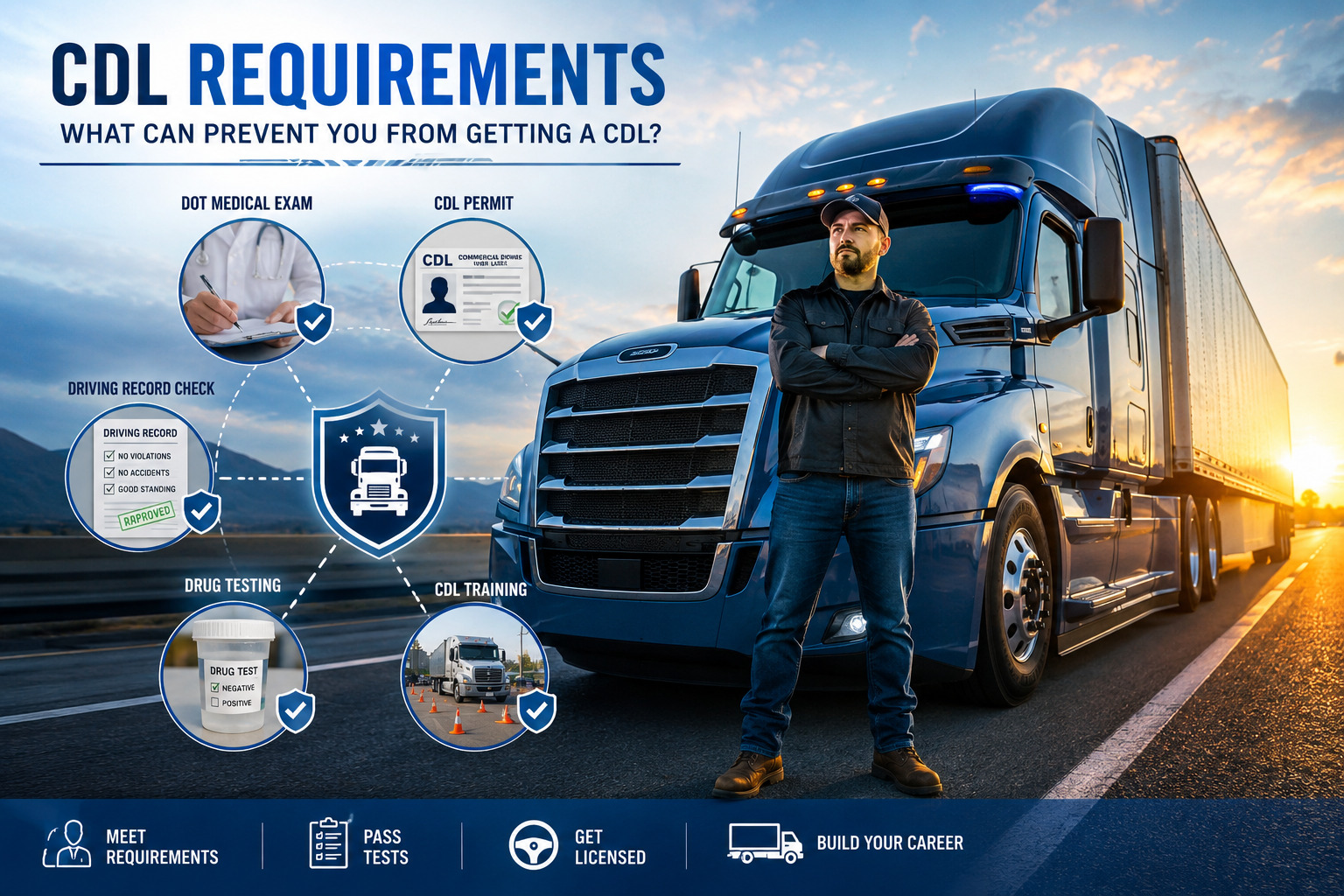
To qualify for a CDL, applicants typically must:
- Meet the minimum age requirement
- Hold a valid driver’s license
- Provide proof of identity and residency
- Pass a DOT medical examination
- Complete required CDL training
- Pass written knowledge tests
- Pass a CDL skills examination
Understanding these requirements before applying can help you avoid delays and move through the licensing process more efficiently.
CDL Age Requirement and Basic Eligibility Rules
One of the first CDL license requirements applicants must meet is the age requirement.
CDL Age Requirement
The minimum CDL age requirement depends on the type of commercial driving you plan to perform.
Drivers who are at least 18 years old can usually obtain a CDL for intrastate driving. This allows them to operate commercial vehicles within their home state.
Drivers who want to cross state lines, transport freight across the country, or haul hazardous materials must generally be at least 21 years old.
Many trucking companies that hire interstate drivers prefer applicants who meet the federal age standard because it allows for greater employment opportunities and route flexibility.
Identification and Residency Requirements
Applicants must also verify their identity and legal residency status. Most states require documentation such as:
- Valid driver’s license
- Social Security card
- Birth certificate or passport
- Proof of state residency
The exact documents required may vary by state, but every applicant must prove their identity before receiving a Commercial Learner’s Permit or CDL.
English Language Requirements
Commercial drivers must be able to read and understand traffic signs, communicate with law enforcement officers, complete reports, and follow safety instructions.
These communication abilities are considered essential CDL requirements because they contribute directly to roadway safety and regulatory compliance.
CDL Physical Requirements You Must Meet
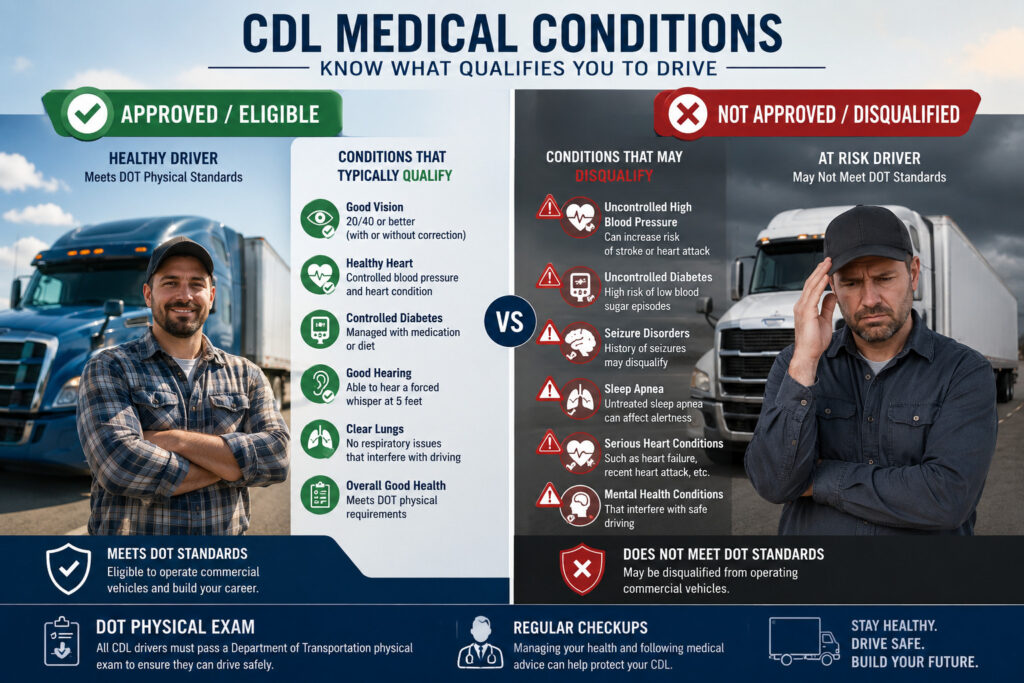
Meeting CDL physical requirements is one of the most important parts of becoming a commercial driver. Since truck drivers often spend long hours on the road, federal regulations require applicants to demonstrate that they are physically capable of operating commercial vehicles safely.
DOT Medical Examination
Every CDL applicant must pass a Department of Transportation physical examination conducted by a certified medical examiner.
During the exam, the examiner evaluates:
- Overall health
- Blood pressure
- Vision
- Hearing
- Medical history
- Physical fitness
Drivers who successfully complete the examination receive a DOT Medical Certificate.
Vision Standards
Vision plays a critical role in commercial vehicle operation. CDL physical requirements generally require drivers to have adequate vision with or without corrective lenses.
Examiners assess:
- Visual acuity
- Peripheral vision
- Ability to distinguish traffic signal colors
Drivers who wear glasses or contact lenses can often qualify if their corrected vision meets federal standards.
Hearing Requirements
Commercial drivers must also meet hearing standards that allow them to recognize warning signals and communicate effectively while driving.
Hearing evaluations help determine whether applicants can safely respond to traffic conditions and emergency situations.
Medical Conditions That May Affect Eligibility
Certain medical conditions may affect CDL eligibility if they interfere with safe vehicle operation.
Examples include:
- Uncontrolled diabetes
- Severe sleep apnea
- Serious heart conditions
- Uncontrolled high blood pressure
- Seizure disorders
Having a medical condition does not automatically result in disqualification. Many drivers continue working successfully after receiving treatment and medical clearance.
Understanding CDL physical requirements and managing health conditions properly can significantly improve your chances of approval.
CDL Testing Requirements and Language Rules
Before receiving a CDL, applicants must successfully complete both written and practical examinations.
Written Knowledge Tests
The written portion evaluates your understanding of commercial driving regulations, vehicle operation, safety procedures, and state specific rules.
Topics commonly include:
- General CDL knowledge
- Vehicle inspection procedures
- Air brake systems
- Combination vehicles
- Hazardous materials regulations
Passing these exams is a critical part of meeting CDL license requirements.
CDL Testing Language Requirements
Many applicants ask about CDL testing language requirements before taking the exam.
Federal regulations require commercial drivers to communicate effectively in English. Drivers must be able to:
- Read road signs
- Understand traffic signals
- Complete reports
- Communicate with law enforcement officers
While some states may offer written testing assistance in multiple languages, commercial drivers are still expected to demonstrate sufficient English proficiency for safe operation.
CDL Skills Testing
The CDL skills exam evaluates practical driving abilities.
The test typically includes:
- Pre trip inspection
- Basic vehicle control
- On road driving evaluation
Examiners assess safety awareness, vehicle handling skills, and compliance with traffic laws.
Proper preparation is essential for passing the skills exam on the first attempt.
Drug and Alcohol CDL Requirements
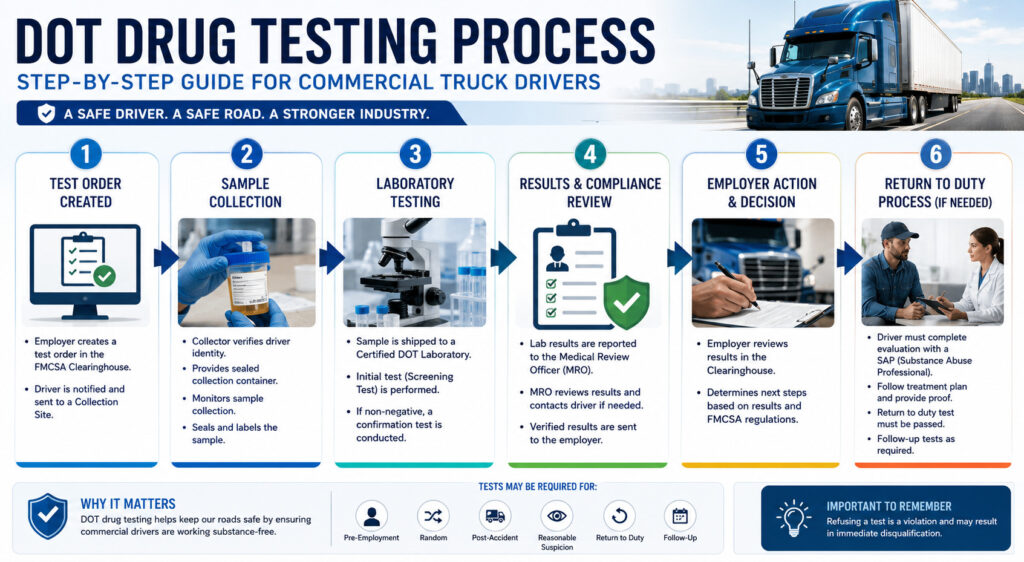
Federal law requires commercial drivers to follow strict drug and alcohol regulations. Safety is the top priority in the trucking industry, which is why drug testing is mandatory.
DOT Drug Testing Rules for CDL Drivers
Commercial drivers must pass a DOT drug test before beginning employment. Drivers are also subject to:
- Random testing
- Post accident testing
- Reasonable suspicion testing
- Return to duty testing
Drug testing screens for substances that could impair safe driving abilities.
Alcohol Restrictions for Commercial Drivers
CDL drivers are held to stricter alcohol standards than regular drivers. The legal blood alcohol concentration limit for commercial drivers is significantly lower than standard passenger vehicle limits.
Violating alcohol regulations can result in license suspension, fines, job loss, and disqualification from commercial driving.
Return to Duty Process After Failed Drug Tests
Drivers who fail a drug or alcohol test may need to complete a Substance Abuse Professional program before returning to work. This process often includes:
- Evaluation
- Education or treatment
- Follow up testing
- Employer approval
Completing the required steps can help drivers regain eligibility under federal CDL requirements.
Class A CDL Requirements vs Class B CDL Requirements
Understanding the difference between license classes is important when evaluating CDL requirements.
Class A CDL Requirements
Class A CDL requirements apply to drivers operating combination vehicles with higher weight ratings.
A Class A CDL typically allows drivers to operate:
- Tractor trailers
- Flatbeds
- Tanker trucks
- Livestock carriers
- Refrigerated trailers
Many long haul trucking careers require a Class A license.
To meet Class A CDL requirements, drivers must complete training, pass knowledge tests, and successfully complete skills testing using qualifying vehicles.
Class B CDL Requirements
Class B CDL requirements apply to drivers operating single commercial vehicles that exceed specific weight limits.
Vehicles commonly operated with a Class B CDL include:
- Straight trucks
- Dump trucks
- Delivery trucks
- Passenger buses
- School buses
Many local driving careers require a Class B CDL.
Understanding the differences between class A CDL requirements and class B CDL requirements helps applicants choose the licensing path that aligns with their career goals.
Texas CDL Requirements for New Drivers
Individuals seeking a CDL in Texas must comply with both federal regulations and state specific licensing standards.
Texas CDL Requirements
Texas CDL requirements include:
- Meeting age eligibility standards
- Passing a DOT physical examination
- Providing required identification documents
- Obtaining a Commercial Learner’s Permit
- Completing required training
- Passing written and skills examinations
These requirements are designed to ensure safe operation of commercial vehicles throughout the state.
CDL Requirements Texas Drivers Must Meet
CDL requirements Texas applicants encounter may vary depending on vehicle type, endorsements, and intended driving activities.
Drivers pursuing passenger, school bus, tanker, or hazardous materials endorsements may need to complete additional testing and background screening.
Texas Permit and Testing Process
Before receiving a CDL, applicants must obtain a Commercial Learner’s Permit and practice under supervision.
The permit process includes:
- Knowledge testing
- Identity verification
- Medical certification
After satisfying permit requirements, applicants may schedule their CDL skills examination.
Understanding Texas CDL requirements early can help applicants avoid unnecessary delays during the licensing process.
CDL Training, Permit, and Skills Test Requirements
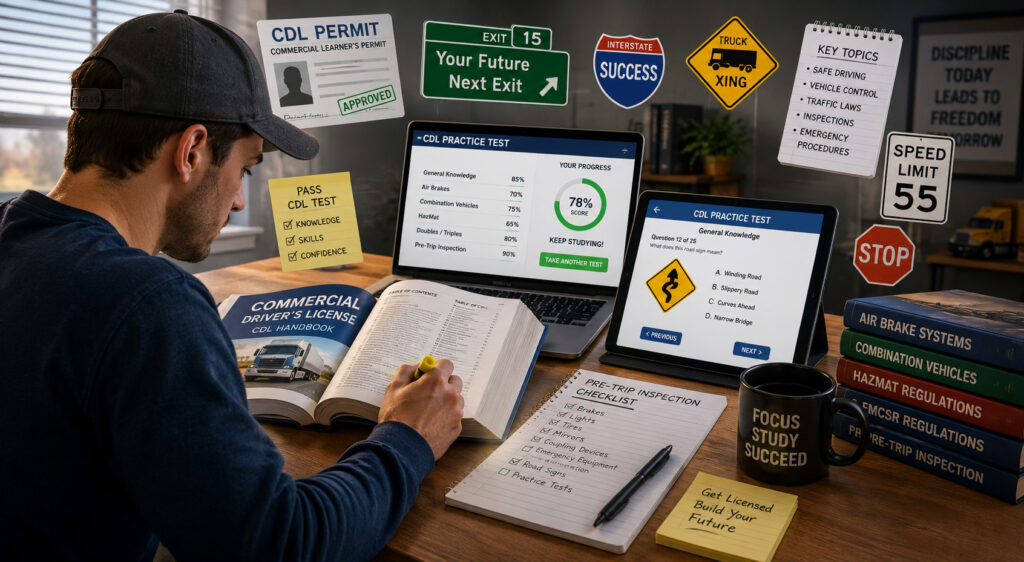
Professional training plays a significant role in preparing drivers for commercial vehicle operation.
CDL Training Requirements
Federal regulations require most first time applicants to complete Entry Level Driver Training before taking the CDL skills examination.
Training programs generally cover:
- Vehicle systems
- Safety procedures
- Federal regulations
- Defensive driving techniques
- Pre trip inspections
Commercial Learner’s Permit
The Commercial Learner’s Permit allows applicants to gain practical driving experience under qualified supervision.
To receive a permit, drivers generally must:
- Meet identification requirements
- Pass written examinations
- Hold a valid driver’s license
- Meet medical certification standards
CDL Skills Test
The CDL skills examination consists of three major sections:
- Pre trip inspection
- Basic vehicle control
- Road driving test
Consistent practice and professional instruction significantly improve performance during testing.
What Can Disqualify You From Getting a CDL?
Although most applicants can qualify by meeting licensing standards, certain issues may affect eligibility.
Serious Traffic Violations
Major driving offenses may result in temporary or permanent CDL disqualification.
Examples include:
- Reckless driving
- Excessive speeding
- Leaving an accident scene
- Driving with a suspended license
Drug and Alcohol Violations
Federal regulations impose strict drug and alcohol standards on commercial drivers.
Violations may include:
- Failed drug tests
- Driving under the influence
- Refusal to submit to testing
These offenses can result in suspension, disqualification, or loss of employment opportunities.
Medical Disqualifications
Applicants who fail to meet CDL physical requirements may face delays until medical issues are properly addressed.
Obtaining treatment and medical clearance often helps drivers regain eligibility.
Criminal Offenses
Some criminal convictions may affect employment opportunities or specific endorsements.
Drivers seeking hazardous materials endorsements must complete additional background screening requirements.
Maintaining a clean driving and legal record remains one of the most effective ways to preserve CDL eligibility.
How to Meet CDL License Requirements Successfully
Following a structured approach can improve your chances of earning a Commercial Driver’s License.
Maintain a Safe Driving Record
Avoid traffic violations and practice responsible driving habits.
Prepare for Your DOT Physical
Schedule regular health checkups and address medical concerns before applying.
Complete Professional Training
A quality CDL training program helps develop the skills and confidence needed to pass examinations successfully.
Study Before Testing
Review the CDL handbook thoroughly and take practice exams whenever possible.
Follow State and Federal Regulations
Understanding current CDL requirements helps ensure compliance throughout your career.
Frequently Asked Questions About CDL Requirements
What are the CDL license requirements?
Most applicants must meet age, identification, medical, training, and testing requirements before receiving a CDL.
What is the CDL age requirement?
Drivers can often obtain an intrastate CDL at 18 years old, while interstate drivers generally must be at least 21 years old.
What are the CDL physical requirements?
Drivers must pass a DOT medical examination that evaluates vision, hearing, blood pressure, and overall health.
What are the Class A CDL requirements?
Class A CDL requirements include training, knowledge testing, skills testing, and qualification to operate combination vehicles.
What are the Class B CDL requirements?
Class B CDL requirements apply to drivers operating large single vehicles such as buses, straight trucks, and dump trucks.
What are the Texas CDL requirements?
Texas CDL requirements include medical certification, permit testing, training compliance, and successful completion of CDL examinations.
Final Thoughts
Understanding CDL license requirements is the first step toward building a successful commercial driving career. Whether you are pursuing a Class A license for long haul trucking or a Class B license for local driving opportunities, meeting the required standards is essential.
By understanding CDL requirements, meeting CDL physical requirements, satisfying CDL testing language requirements, and following Texas CDL requirements when applicable, you can position yourself for success in the transportation industry. With proper training, preparation, and commitment to safety, earning a Commercial Driver’s License can open the door to a stable and rewarding career.