For many commercial drivers, earning a Class B CDL is the first step toward building a successful career in the transportation industry. While a Class B license opens the door to a variety of driving jobs, many drivers eventually decide to pursue a Class A CDL to increase their earning potential and gain access to a wider range of career opportunities.
Understanding the class b to class a cdl requirements is essential before beginning the upgrade process. Whether you currently drive a dump truck, box truck, school bus, or another Class B vehicle, upgrading your license can help you qualify for positions involving tractor trailers, tanker trucks, flatbeds, and other combination vehicles.
Many drivers hesitate because they assume the process is complicated or time consuming. In reality, upgrading from a Class B CDL to a Class A CDL can be straightforward when you understand the requirements, training expectations, and testing process. This guide explains everything you need to know about making the transition successfully.
Why More Drivers Are Upgrading From Class B to Class A CDL
The trucking industry continues to create opportunities for qualified Class A drivers. As freight demand grows, employers are actively seeking drivers who can operate combination vehicles and handle larger transportation responsibilities.
The Growing Demand for Class A Drivers
Companies across the country rely on Class A drivers to move goods efficiently. From retail products and construction materials to fuel and specialized freight, Class A drivers play a critical role in keeping supply chains moving.
Because of this demand, many drivers choose a class b to class a cdl upgrade to qualify for a broader range of positions.
Higher Paying Driving Jobs
One of the biggest reasons drivers pursue an upgrade from class b to class a cdl is the potential for higher earnings. While Class B positions can provide stable employment, many Class A jobs offer better compensation, bonuses, and advancement opportunities.
Drivers who obtain additional endorsements may increase their earning potential even further.
Greater Flexibility in the Trucking Industry
A Class A CDL provides more flexibility when exploring different career paths. Drivers can work in long haul transportation, regional trucking, specialized freight, tanker operations, flatbed hauling, and many other sectors.
This flexibility often gives drivers more options when choosing schedules, routes, and employers.
CDL A and B: Understanding the Key Differences Before You Upgrade
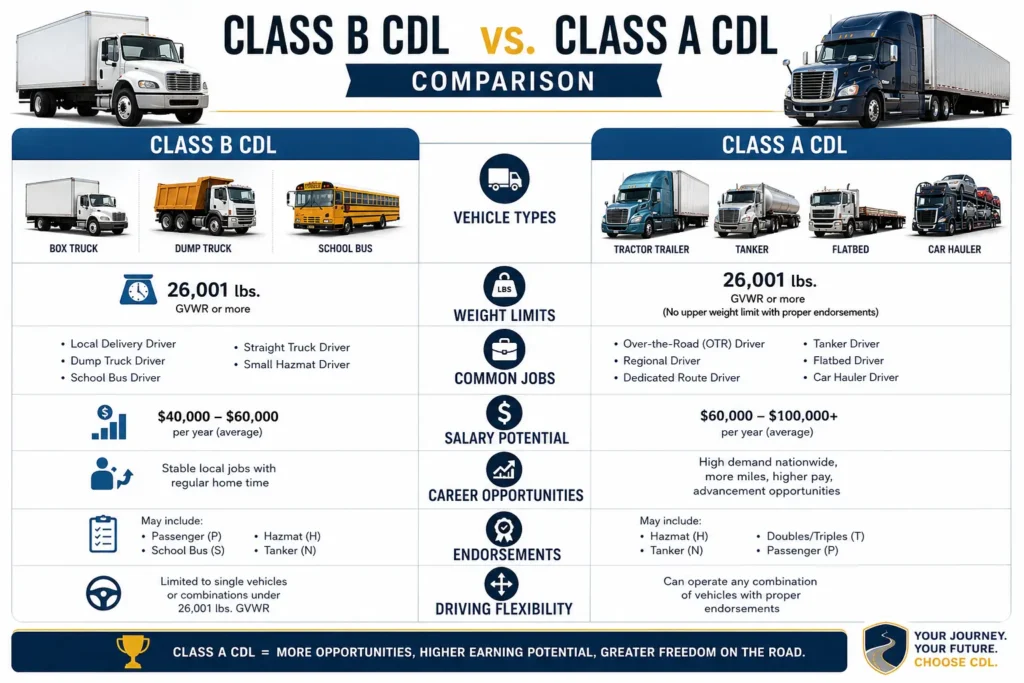
Before beginning a cdl b to a upgrade, it is important to understand how the two license classifications differ.
What Is a Class A CDL?
A Class A CDL allows drivers to operate combination vehicles with a Gross Combination Weight Rating of 26,001 pounds or more, provided the towed unit exceeds 10,000 pounds.
Examples include:
-
- Tractor trailers
-
- Tanker trailers
-
- Flatbed trucks
-
- Livestock carriers
-
- Vehicle transport trailers
Because of the versatility of this license, many employers prefer applicants who hold a Class A CDL.
What Is a Class B CDL?
A Class B CDL allows drivers to operate single vehicles with a Gross Vehicle Weight Rating of 26,001 pounds or more or vehicles towing less than 10,000 pounds.
Examples include:
-
- Box trucks
-
- Dump trucks
-
- Cement mixers
-
- School buses
-
- City buses
-
- Garbage trucks
While these positions remain valuable within the transportation industry, many drivers choose to upgrade class b to class a to expand their opportunities.
Which CDL Class Offers More Career Opportunities?
Both licenses provide excellent career options, but a Class A CDL generally offers access to a wider range of driving positions. Drivers can often qualify for specialized freight operations and long distance transportation jobs that may not be available to Class B license holders.
Class B to Class A CDL Requirements: What Drivers Need Before Getting Started
Understanding the class b to class a cdl requirements can help you prepare for a smoother transition.
Requirement #1: Hold a Valid Class B CDL
The first requirement is maintaining a valid Class B CDL in good standing. Drivers should ensure their license remains current and free from disqualifying violations.
Requirement #2: Meet Age and Medical Requirements
Drivers must meet all federal and state eligibility standards. This includes passing a Department of Transportation medical examination and maintaining a valid Medical Examiner’s Certificate.
Good physical health and the ability to safely operate commercial vehicles are essential.
Requirement #3: Obtain a Class A Commercial Learner’s Permit
Before earning a Class A CDL, drivers must obtain a Commercial Learner’s Permit.
This typically involves passing written knowledge examinations covering:
-
- General knowledge
-
- Combination vehicles
-
- Air brakes when applicable
The permit allows drivers to gain experience operating Class A vehicles under proper supervision.
Requirement #4: Complete ELDT Training Requirements
Entry Level Driver Training, commonly known as ELDT, is an important component of the upgrade process.
This federally mandated training helps drivers develop the knowledge and practical skills needed to safely operate Class A commercial vehicles.
Many drivers choose professional training programs because they provide structured instruction and hands on experience.
Requirement #5: Pass the Class A Skills and Road Test
Drivers must demonstrate their ability to safely operate a Class A commercial vehicle through a comprehensive skills examination.
The test generally includes:
-
- Vehicle inspection
-
- Basic control skills
-
- On road driving evaluation
Passing all sections successfully is required before receiving a Class A CDL.
Requirement #6: Meet State Specific Regulations
While federal requirements establish the foundation, individual states may have additional procedures or testing requirements. Drivers should verify all local regulations before beginning the process.
How to Upgrade CDL B to CDL A: A Step by Step Roadmap
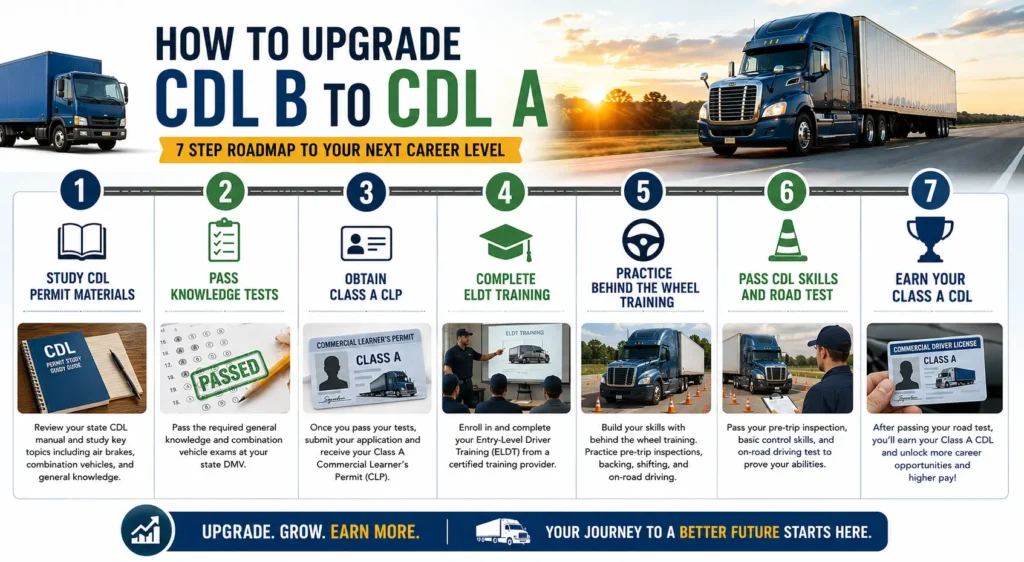
Many drivers wonder exactly how to upgrade cdl b to cdl a. The process becomes much easier when broken into manageable steps.
Step 1: Study for the Class A Permit Exam
Preparation begins with studying commercial driving manuals and understanding combination vehicle operations.
Knowledge of air brake systems, vehicle inspections, and safety regulations is especially important.
Step 2: Pass the Required Knowledge Tests
After studying, drivers must pass the required written examinations to obtain their permit.
Strong preparation can help reduce stress and improve first attempt success rates.
Step 3: Enroll in Professional CDL Training
Although some drivers attempt to prepare independently, professional training often provides significant advantages.
Experienced instructors can identify weaknesses, improve driving techniques, and help students develop confidence behind the wheel.
At Road Masters CDL Academy, many drivers seeking a class b to class a cdl transition benefit from structured instruction that focuses on real world commercial driving skills rather than simply teaching students how to pass a test.
Step 4: Learn Combination Vehicle Operations
Operating a tractor trailer differs significantly from operating many Class B vehicles.
Drivers must learn:
-
- Coupling procedures
-
- Uncoupling procedures
-
- Weight distribution
-
- Turning techniques
-
- Trailer management
Mastering these skills is essential for long term success.
Step 5: Complete Behind the Wheel Training
Practical driving experience is one of the most important parts of upgrading cdl b to a.
Drivers should spend time practicing:
-
- Backing maneuvers
-
- Lane positioning
-
- Highway driving
-
- City driving
-
- Defensive driving techniques
The more comfortable a driver becomes behind the wheel, the greater their chances of success during testing.
Step 6: Pass Your CDL Road Test
The road test evaluates whether drivers can safely operate a Class A commercial vehicle in real traffic conditions.
Examiners assess vehicle control, decision making, safety awareness, and compliance with traffic laws.
Step 7: Receive Your Class A CDL License
Once all testing requirements have been completed successfully, drivers receive their upgraded Class A CDL and become eligible for a much broader range of employment opportunities.
For many drivers, this milestone represents the beginning of a new chapter in their professional career.
The Biggest Challenges Drivers Face When Upgrading CDL B to A
While many drivers successfully complete a cdl b to a upgrade every year, the process comes with challenges that should not be overlooked. Understanding these obstacles ahead of time can help drivers prepare more effectively and avoid unnecessary setbacks.
Learning to Handle Combination Vehicles
One of the most noticeable differences between Class B and Class A driving is the addition of a trailer. Combination vehicles respond differently when turning, backing, and maneuvering in tight spaces.
Drivers who are accustomed to operating straight trucks often need time to adjust to trailer tracking, off tracking, and wider turning requirements.
Mastering Backing Maneuvers
Backing is often considered one of the most challenging skills for drivers who are upgrading cdl b to a. Successful backing requires patience, awareness, and consistent practice.
Whether performing straight line backing, offset backing, or alley dock maneuvers, drivers must learn to control both the tractor and trailer while maintaining safe positioning.
Understanding Air Brake Systems
Many Class A vehicles utilize advanced air brake systems that require a thorough understanding of inspections and operation. Drivers must learn how to identify potential issues and conduct proper brake checks before operating the vehicle.
Passing the Pre Trip Inspection
The pre trip inspection is one of the most important portions of the CDL skills test. Drivers are expected to identify and explain vehicle components while demonstrating an understanding of safety procedures.
Many students find this section challenging because it requires both technical knowledge and attention to detail.
Adjusting From Local to Highway Driving
Some drivers pursuing an upgrade from class b to class a cdl have extensive local driving experience but limited exposure to long distance highway operations. Learning to safely manage higher speeds, changing traffic conditions, and extended driving periods is an important part of becoming a successful Class A driver.
What You’ll Actually Learn During a CDL B to A Upgrade Program
Professional training programs provide much more than basic driving instruction. Drivers gain valuable knowledge and practical skills that prepare them for real world commercial driving situations.
Vehicle Inspection Procedures
Drivers learn how to perform detailed inspections before every trip. These inspections help identify safety concerns and ensure vehicles remain compliant with regulations.
Coupling and Uncoupling Trailers
Proper trailer connection procedures are critical for safety. Students learn how to inspect, connect, and disconnect trailers using approved industry practices.
Defensive Driving Techniques
Defensive driving helps commercial drivers anticipate hazards and respond safely to changing road conditions. This skill is essential for preventing accidents and protecting both drivers and the public.
Safe Cargo Handling Practices
Understanding weight distribution and cargo securement is an important part of Class A operations. Improperly loaded freight can affect vehicle stability and create dangerous situations.
Highway and City Driving Skills
Training programs expose students to a variety of driving environments. This helps drivers build confidence while navigating highways, urban areas, construction zones, and other challenging conditions.
Federal Safety Regulations
Commercial drivers must understand the regulations that govern the industry. Training covers important topics such as hours of service requirements, safety compliance, and inspection procedures.
At Road Masters CDL Academy, students receive hands on training designed to build practical skills that can be applied immediately in professional driving careers.
How Long Does It Take to Upgrade From Class B to Class A CDL?
One of the most common questions drivers ask is how long the process will take.
Fast Track CDL Upgrade Programs
Some training providers offer accelerated programs that allow qualified drivers to complete their training within a few weeks. These programs are often ideal for individuals who can dedicate significant time to learning and practice.
Part Time Training Options
Drivers who are currently employed may prefer part time schedules that allow them to continue working while pursuing their upgrade class b to class a goals.
Evening and weekend training options can provide greater flexibility for busy professionals.
Factors That Can Affect Your Timeline
Several factors influence how quickly drivers complete the process, including:
-
- Permit preparation
-
- Training schedule availability
-
- Driving experience
-
- Test appointment availability
-
- Individual learning pace
Most drivers complete the process within several weeks to a few months depending on their circumstances.
How Much Does a CDL B to A Upgrade Cost?
The total cost of a class b to class a cdl upgrade varies depending on location, training provider, and licensing requirements.
CDL Permit Fees
Permit fees are typically paid directly to the state licensing agency. These costs vary by state.
Training Costs
Professional training represents the largest portion of the investment. While costs differ among schools, quality instruction often provides significant long term value.
DOT Physical Examination Costs
Drivers must complete a medical examination performed by a certified medical examiner. The cost of the examination varies based on location and provider.
Skills Test Fees
Some states charge separate fees for CDL skills testing and license issuance.
Financial Assistance and Sponsorship Opportunities
Many drivers explore grants, workforce development programs, employer sponsorships, or financing options to help cover training expenses.
Is Upgrading From Class B to Class A CDL Worth the Investment?
For many drivers, the answer is yes.
Comparing Class A and Class B Driver Salaries
Although salaries vary based on location, experience, and job type, Class A drivers often have access to positions that offer higher earning potential than many traditional Class B roles.
Drivers who specialize in tanker operations, dedicated freight, or other niche sectors may earn even more.
Long Term Career Growth Potential
A Class A CDL creates opportunities for advancement throughout the transportation industry. Drivers may pursue specialized freight, trainer positions, management roles, or owner operator opportunities.
Industries That Prefer Class A Drivers
Many industries actively seek drivers who possess a Class A CDL because of the flexibility and versatility the license provides.
Examples include:
-
- Freight transportation
-
- Construction
-
- Energy
-
- Agriculture
-
- Manufacturing
-
- Logistics
Return on Investment for Professional Drivers
When evaluating long term career growth, many drivers find that the increased earning potential and expanded job opportunities justify the investment required to complete the upgrade.
Endorsements That Can Increase Your Earning Potential
After completing a class b to class a cdl transition, many drivers choose to obtain endorsements that allow them to operate specialized equipment.
Tanker Endorsement
This endorsement permits drivers to transport liquid cargo in tanker vehicles.
Hazmat Endorsement
Hazmat certification allows drivers to transport regulated hazardous materials. Additional background checks and testing requirements typically apply.
Tanker and Hazmat Combination Endorsement
Drivers who transport hazardous liquids often pursue both qualifications to increase employment opportunities.
Doubles and Triples Endorsement
This endorsement allows drivers to operate multiple trailer combinations where permitted by law.
Which Endorsements Pay the Most?
Compensation varies by employer and region, but specialized endorsements often provide access to higher paying positions because they require additional skills and qualifications.
Career Opportunities After You Upgrade Class B to Class A
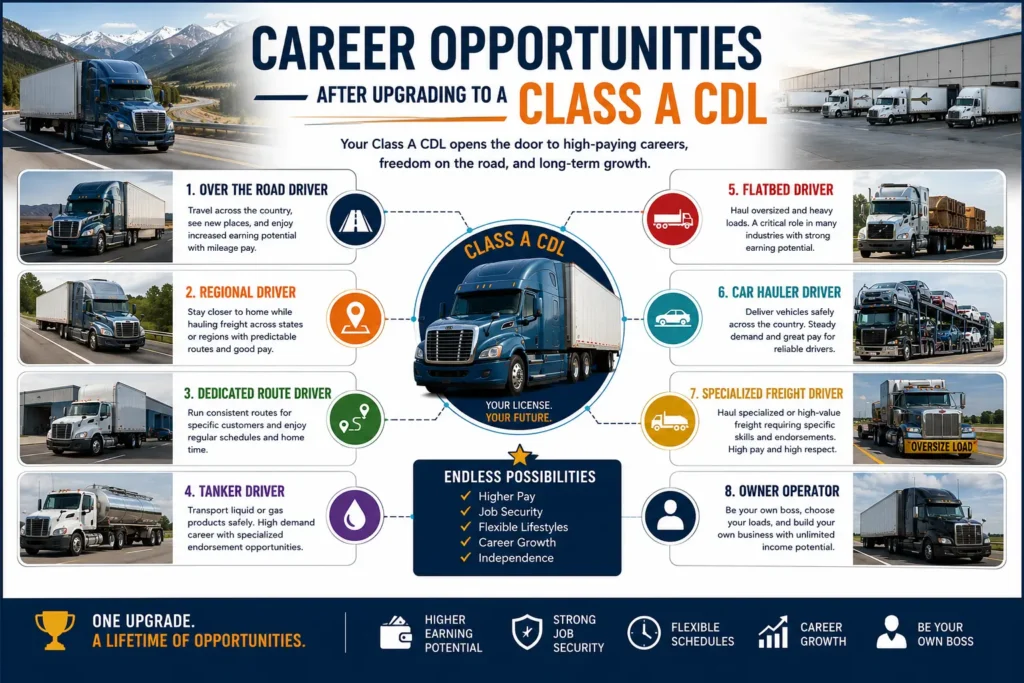
Completing a successful upgrade from class b to class a cdl opens the door to numerous career paths.
Over the Road Truck Driver
OTR drivers transport freight across long distances and often travel throughout multiple states.
Regional Truck Driver
Regional routes typically keep drivers within a specific geographic area while providing consistent work opportunities.
Dedicated Route Driver
Dedicated drivers often work with a single customer or route, creating predictable schedules and steady employment.
Flatbed Driver
Flatbed transportation involves hauling oversized or specialized cargo that requires securement knowledge and attention to detail.
Tanker Driver
Tanker drivers transport liquid products and often benefit from strong earning potential.
Specialized Freight Driver
Drivers with advanced skills and endorsements may qualify for highly specialized transportation positions that offer competitive compensation.
Many graduates of Road Masters CDL Academy pursue these opportunities because a Class A CDL provides significantly greater flexibility when planning long term career goals.
Common Mistakes to Avoid During a Class B to Class A CDL Upgrade
Choosing Training Based Only on Price
The least expensive option is not always the best option. Quality instruction and adequate driving time are important investments in your future career.
Skipping ELDT Requirements
Failure to complete required training can delay the licensing process and create unnecessary complications.
Rushing Through Behind the Wheel Training
Drivers should focus on developing safe habits and strong skills rather than attempting to complete training as quickly as possible.
Not Preparing for the Pre Trip Inspection
The inspection portion of the exam is often underestimated. Thorough preparation can improve confidence and performance on test day.
Waiting Too Long to Schedule the Road Test
Scheduling delays can occur in some areas. Planning ahead helps drivers maintain momentum throughout the upgrade process.
Frequently Asked Questions About Class B to Class A CDL Requirements
Can I Upgrade From Class B to Class A Without Attending CDL School?
Requirements vary by state, but many drivers choose professional training because it provides valuable instruction and practical driving experience.
Is ELDT Training Required for Every Driver?
Federal regulations require ELDT training for many individuals seeking a Class A CDL upgrade. Drivers should verify current requirements before beginning the process.
How Difficult Is the Class A CDL Road Test?
The difficulty level depends on preparation and driving experience. Drivers who complete quality training and practice regularly often perform well during testing.
Can I Continue Working While Upgrading?
Yes. Many drivers complete training through part time or flexible scheduling options while maintaining their current employment.
How Many Times Can I Retake the CDL Skills Test?
Retesting policies vary by state. Drivers should review local regulations regarding waiting periods and additional fees.
Is a CDL B to A Upgrade Worth It?
For many drivers, the expanded job opportunities, increased earning potential, and career flexibility make the investment worthwhile.
Final Thoughts: Taking the Next Step Toward a Class A CDL
Understanding the class b to class a cdl requirements is the first step toward unlocking new opportunities within the trucking industry. While the process requires dedication, training, and preparation, the rewards can be substantial.
Whether your goal is to increase your income, qualify for specialized driving positions, or expand your career options, a Class A CDL can help you reach those objectives. By understanding the requirements, completing the necessary training, and developing strong driving skills, you can successfully navigate the path toward a Class A license.
For drivers considering how to upgrade cdl b to cdl a, the most important step is getting started. With the right training, commitment, and guidance, upgrading cdl b to a can become one of the most valuable career decisions you make in the transportation industry.