The trucking industry is the backbone of the economy, moving goods across the country every single day. As demand for freight transportation grows, the need for qualified drivers is higher than ever. This growing demand translates into excellent job stability, competitive pay, and the freedom of hitting the open road.
If you are wondering how to become a truck driver, you are in the right place. Figuring out how to become a trucker involves navigating several licensing options, medical requirements, and specialized training programs.
This guide covers everything you need to know about the journey. We will break down commercial driver’s license (CDL) training, explain the differences between Class A and Class B licenses, and provide a clear timeline for your career change.
How to Become a Truck Driver: Understanding the Career Path
Before committing to this profession, it helps to understand what a truck driver actually does. Daily responsibilities go far beyond simply steering a vehicle. Drivers conduct thorough pre-trip and post-trip inspections, secure cargo, plan efficient routes, and maintain detailed logs of their hours of service.
There are several types of trucking jobs available. Long-haul drivers travel across state lines, often spending days or weeks away from home. Regional drivers operate within a specific geographic area, allowing them to return home on weekends. Local drivers typically work within a single city or county, enjoying standard daily shifts and returning home every night.
Succeeding in this role requires intense focus, personal discipline, and excellent time management. You must stay alert during long stretches of highway driving and manage your schedule to meet strict delivery deadlines. This career path is best suited for independent individuals who enjoy solitude, appreciate mechanical work, and value the autonomy of working outside a traditional office.
The earning potential is substantial. Entry-level drivers often start with a solid base salary, and experienced professionals can earn significantly more. Growth opportunities include becoming an owner-operator, moving into specialized hauling, or transitioning into fleet management.
How to Become a Trucker: Basic Requirements You Need to Meet
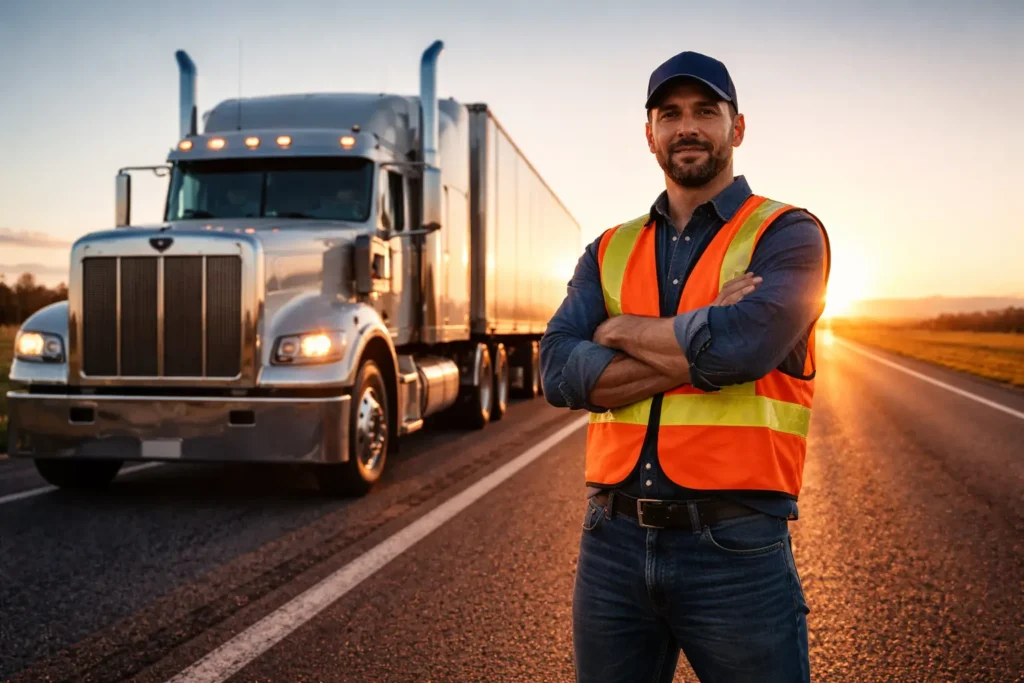
Before enrolling in a driving school, you must meet several basic prerequisites. Age is the first factor. You can obtain a CDL at age 18 in most states, but federal regulations require you to be at least 21 to drive commercial vehicles across state lines (interstate commerce) or to haul hazardous materials.
You need a valid regular driver’s license to start the process. Additionally, the Department of Transportation (DOT) requires a thorough physical examination to ensure your medical fitness. A certified medical examiner will check your vision, hearing, blood pressure, and overall physical health.
Maintaining a clean driving record is crucial. Trucking companies and insurance providers review your motor vehicle report for serious traffic violations, DUIs, and excessive speeding tickets. Depending on the company and the type of freight you will haul, you may also need to pass a background check. Meeting these requirements early prevents wasted time and money before starting your CDL training.
Class A CDL Training: What It Is and Who Should Choose It
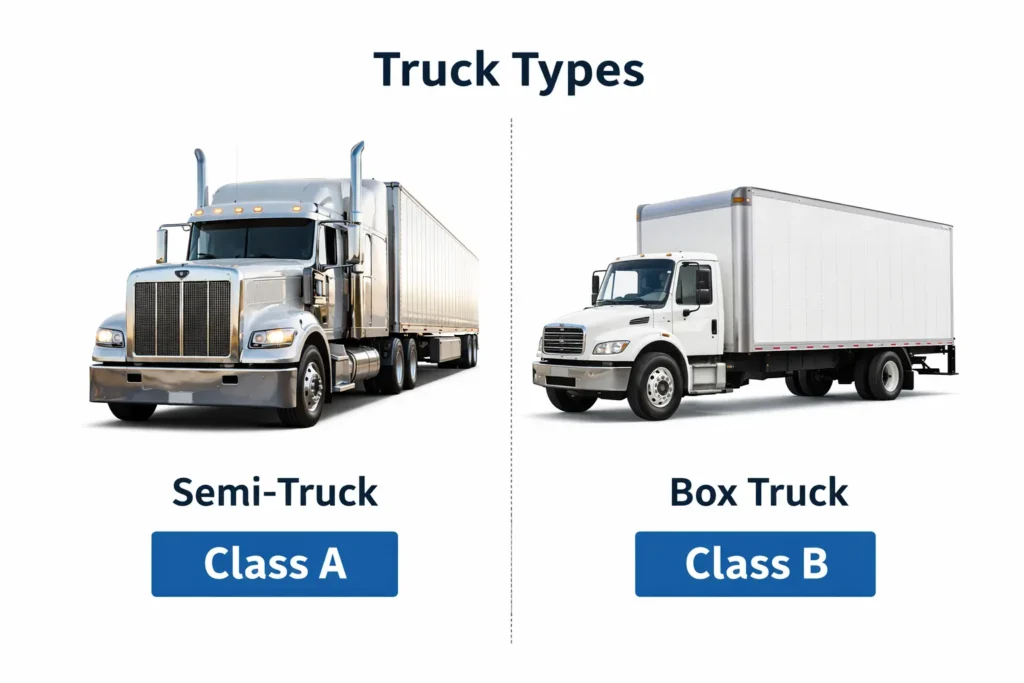
A Class A CDL is the most comprehensive commercial driving license available. It allows you to operate any combination of vehicles with a Gross Combination Weight Rating (GCWR) of 26,001 or more pounds, provided the towed vehicle weighs more than 10,000 pounds.
This license covers large vehicles like tractor-trailers, big rigs, flatbeds, and livestock carriers. Class A CDL training prepares you for interstate driving and long-haul career opportunities. During your schooling, you learn complex skills such as shifting heavy-duty transmissions, coupling and uncoupling trailers, backing up large articulated vehicles, and managing wide turns.
Choosing a Class A CDL offers the highest salary potential and the most job flexibility. You can haul almost any type of freight, giving you access to the largest pool of job openings. Anyone looking to maximize their income and willing to travel long distances should choose this path.
Class B CDL Training: Career Options and Benefits
A Class B CDL allows you to operate a single vehicle with a GVWR of 26,001 or more pounds, or tow a vehicle weighing less than 10,000 pounds. This limits you to straight trucks and unarticulated vehicles.
With this license, you can drive dump trucks, box trucks, delivery trucks, large passenger buses, and garbage trucks. Job opportunities are heavily concentrated in local and regional markets. Class B CDL training focuses on maneuvering single-unit commercial vehicles, performing proper safety inspections, and handling localized delivery routes.
The primary benefit of a Class B license is schedule stability. These drivers usually work regular daily hours, enjoy less travel, and sleep in their own beds every night. Individuals who want a driving career but prioritize work-life balance and family time are the ideal candidates for this license.
Class A vs Class B CDL: Key Differences Explained
The main difference between these two licenses comes down to vehicle type and weight limits. A Class A license allows you to tow trailers weighing over 10,000 pounds. A Class B license restricts your towed cargo weight to under 10,000 pounds.
Job roles vary significantly based on your choice. Class A drivers dominate the over-the-road freight industry. Class B drivers typically work in construction, local delivery, and public transportation. Due to the difficulty of driving tractor-trailers and the demanding lifestyle of long-haul routes, Class A drivers generally earn a higher salary.
Training duration also differs. Class A CDL training takes longer because you must master articulated vehicles and complex coupling systems. You should base your decision entirely on your career goals. If you want maximum income and love traveling, get a Class A license. If you want local work and daily home time, a Class B license makes the most sense.
Step-by-Step Process on How to Become a Truck Driver
Step 1 – Meet Eligibility Criteria
Review your state’s specific age and driving record requirements. Schedule your DOT physical exam and ensure you have a standard driver’s license in good standing.
Step 2 – Choose the Right CDL License
Decide whether Class A or Class B aligns with your personal goals. Consider your desired income, willingness to travel, and the types of vehicles you feel comfortable operating.
Step 3 – Enroll in CDL Training
Professional training is highly recommended and often required. Look for a trucking school registered with the Federal Motor Carrier Safety Administration (FMCSA). Ensure the program offers plenty of behind-the-wheel practice and job placement assistance.
Step 4 – Get Your Commercial Learner’s Permit (CLP)
Before you can practice driving on public roads, you must pass a written knowledge test at your local DMV. Study your state’s CDL manual thoroughly. The test covers general knowledge, air brakes, and combination vehicles (if applicable).
Step 5 – Complete Behind-the-Wheel Training
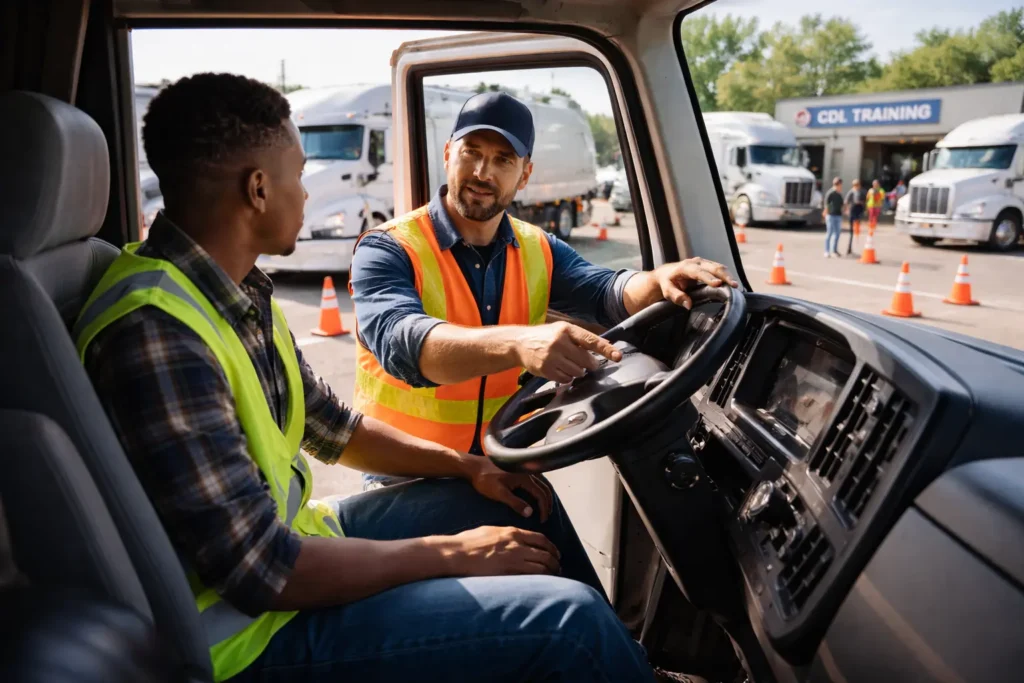
With your CLP in hand, you will begin hands-on driving experience with an instructor. You will practice shifting, turning, backing up, and highway driving. This phase emphasizes safety and real-road practice.
Step 6 – Pass the CDL Skills Test
The final exam consists of three parts. First, you must complete a pre-trip inspection, identifying various vehicle components and explaining their safety functions. Next is the basic control test, where you demonstrate reversing and parking maneuvers in an enclosed lot. Finally, you take the road test in real traffic conditions.
Step 7 – Start Applying for Jobs
Once you hold your official CDL, you can begin your job search. Look for trucking companies that hire recent graduates and offer robust orientation programs. Networking through your driving school is an excellent way to land your first job.
How to Get Class B CDL: A Focused Step-by-Step Guide
Figuring out how to get Class B CDL easily involves following a slightly modified path. The eligibility criteria and permit process remain identical to the Class A route. However, the written test is shorter because you do not need to take the combination vehicle endorsement exam.
Training differs because you will not practice coupling trailers or backing up articulated joints. Because the curriculum is less complex, the time required to complete Class B training is generally shorter. Once licensed, you can immediately seek local job opportunities in construction, municipal services, or local delivery. To pass the test easily, spend extra time mastering the pre-trip inspection, as this is where many applicants struggle.
How Long Does CDL Training Take and What Does It Cost?
Class A CDL training typically takes four to eight weeks, depending on whether you attend a full-time or part-time program. Class B training is often shorter, ranging from two to four weeks.
The cost varies widely based on location and program quality. Generally, tuition ranges from $3,000 to $7,000. Factors affecting the cost include the student-to-instructor ratio, the amount of behind-the-wheel time provided, and the reputation of the school.
Many drivers utilize financial aid, state grants, or company-sponsored training options. In a sponsored program, a trucking company pays for your schooling in exchange for a commitment to work for them for a specified period. The return on investment (ROI) is extremely rapid, as you can begin earning a professional salary within a few months of starting.
Skills You Need to Succeed as a Truck Driver
Operating a heavy commercial vehicle requires a unique set of skills. Smooth driving, proper braking, and understanding turning radiuses are critical technical abilities.
Navigation and route planning prevent delays and keep you out of restricted areas. Time management is heavily regulated by hours-of-service rules, requiring you to carefully plan your driving, resting, and loading times.
Safety awareness is the most important trait. You must constantly monitor weather conditions, traffic patterns, and the behavior of other drivers. Finally, strong communication skills ensure clear interactions with dispatchers, warehouse managers, and customers.
Career Opportunities After CDL Training
The logistics sector is vast. You can find employment in retail distribution, food service, construction, and manufacturing.
Entry-level roles usually involve dry van or refrigerated freight. Experienced roles offer higher pay and better routes. As you gain miles, you can pursue specialized driving jobs. By obtaining additional endorsements, you can haul hazardous materials (hazmat), drive tanker trucks, or operate double and triple trailers.
Common Mistakes to Avoid When Becoming a Trucker
Many new drivers try to cut corners by skipping proper professional training. This often results in failed licensing tests and makes finding a job incredibly difficult.
Choosing the wrong CDL type for your lifestyle is another frequent error. Do not get a Class A license if you absolutely refuse to drive interstate routes, and do not settle for a Class B if your goal is maximum income.
Failing to study the CDL manual leads to repeated failures on the written permit exams. Ignoring safety regulations or trying to hide medical conditions will eventually disqualify you from the industry. Finally, lacking research before joining a school can lead to enrolling in unaccredited programs that employers do not respect.
Start Your Journey on the Open Road
Taking the initiative to earn your commercial license opens the door to a secure and well-paying profession. The logistics industry relies entirely on skilled drivers, ensuring that your newly acquired abilities will remain in high demand for decades to come.
If you want independence, competitive wages, and the chance to travel, learning how to become a truck driver is your first step forward. Research local schools, prepare for your physical, and study your state manual.
FAQs About Becoming a Truck Driver
How to become a truck driver with no experience?
You start by obtaining your Commercial Learner’s Permit (CLP) and enrolling in a certified CDL training school. These programs are designed specifically for individuals with zero commercial driving background and will teach you everything from basic shifting to highway navigation.
How to become a trucker quickly?
The fastest route is to attend an accelerated, full-time CDL training program. These intensive courses operate five days a week and can prepare you for the final skills test in roughly three to four weeks.
What is the difference between Class A CDL training and Class B CDL training?
Class A training focuses on large, articulated vehicles like tractor-trailers and covers complex skills like coupling and uncoupling. Class B training focuses on single, unarticulated vehicles like box trucks and dump trucks, requiring a shorter training duration.
How to get Class B CDL easily?
Study the state CDL manual thoroughly to pass the written permit test on your first try. Practice the pre-trip inspection diligently, as memorizing the vehicle components and safety checks is the most challenging part of the final exam.
Is CDL training worth it?
Yes. The initial cost and time investment are relatively small compared to the immediate access to a stable, well-paying career with high job security and excellent benefits.
Ready to Take the Wheel?
Now that you know exactly what it takes to launch your driving career, it is time to take action. Earning your license gives you access to an industry full of opportunity, stability, and growth. Start your journey today. Check out our comprehensive Professional CDL Driving School in Brownsville to find the right program for you, or visit our Roadmaster Academy to speak with an advisor about your future in trucking.