If you’re considering a career in commercial driving, one of the first questions you may ask is: can you get a CDL at 18? The answer is yes. In many states, individuals can earn a Commercial Driver’s License (CDL) at 18 years old and begin working in certain trucking positions. However, there are important rules, restrictions, and opportunities that every aspiring driver should understand before starting their journey.
The trucking industry offers a rewarding career path with strong demand for qualified drivers. For young adults who want to enter the workforce early, becoming a truck driver at 18 can provide valuable experience, steady income, and long-term career growth. In this guide, we’ll explain everything you need to know about CDL age requirements, available job opportunities, and the steps to launch your trucking career successfully.
How Old Do You Have to Be to Get Your CDL?
One of the most common questions among new drivers is how old do you have to be to get your CDL. While age requirements can vary slightly by state, federal regulations establish the minimum standards for obtaining a CDL.
Minimum CDL Age Requirements in the United States
In most states, you can apply for a CDL at the age of 18. This allows you to operate commercial vehicles within your home state, a practice known as intrastate driving.
Drivers who are 21 years old or older gain additional privileges, including:
- Driving across state lines
- Transporting interstate freight
- Accessing a wider range of trucking jobs
- Qualifying for certain endorsements and specialized positions
Understanding these age requirements is essential before enrolling in a training program or applying for trucking jobs.
CDL Age Requirements for Different License Classes
Commercial Driver’s Licenses are divided into different classes based on the type of vehicle you intend to operate.
Class A CDL
A Class A CDL allows drivers to operate combination vehicles with a Gross Combination Weight Rating (GCWR) of 26,001 pounds or more. This license is commonly used for tractor-trailers and long-haul trucking.
Class B CDL
A Class B CDL permits the operation of single vehicles weighing 26,001 pounds or more, including dump trucks, buses, and straight trucks.
Class C CDL
A Class C CDL is generally required for vehicles designed to transport hazardous materials or multiple passengers.
In many states, drivers can pursue these licenses starting at age 18, provided they meet all other eligibility requirements.
Intrastate vs. Interstate Driving Rules
The difference between intrastate and interstate driving is one of the most important concepts for young CDL holders.
Intrastate Driving
- Operates entirely within one state
- Available to qualified CDL holders aged 18 and older
- Common for local and regional routes
Interstate Driving
- Involves crossing state lines
- Generally requires drivers to be at least 21 years old
- Provides access to more employment opportunities
Knowing these distinctions helps answer questions such as can you become a truck driver at 18 and what type of work may be available initially.
Can You Get Your CDL at 18?
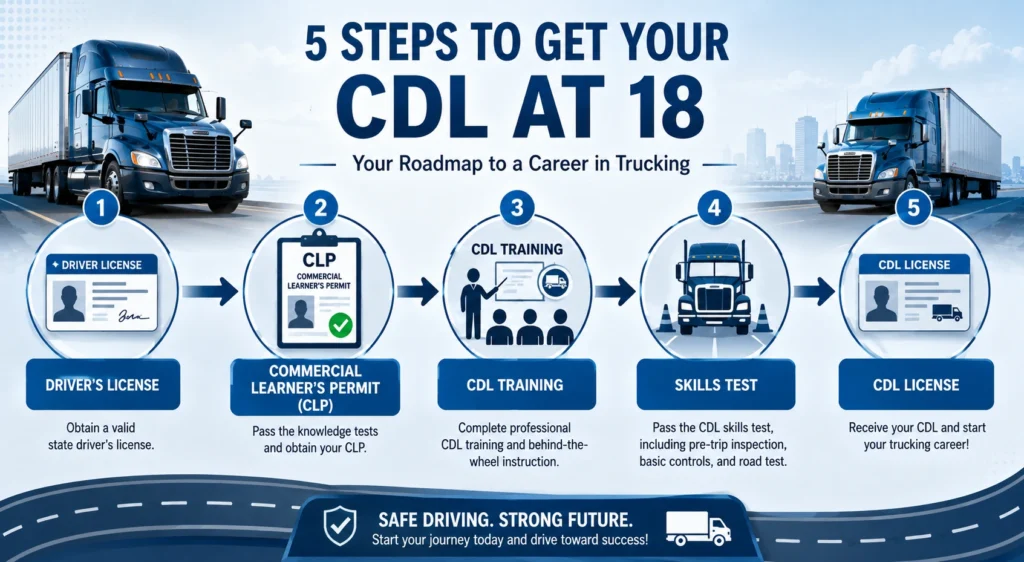
Many aspiring drivers ask, can you get your CDL at 18 and begin working immediately. In most cases, yes, but you must complete several important steps first.
Eligibility Requirements
Before applying for a CDL, you will generally need to:
- Hold a valid driver’s license
- Meet state residency requirements
- Pass a Department of Transportation medical examination
- Provide necessary identification documents
- Meet federal and state safety standards
Steps to Earn a CDL at 18
Obtaining a CDL involves training, testing, and preparation.
Step 1: Meet Age Requirements
Verify that your state allows CDL applicants to apply at age 18 and review any additional requirements.
Step 2: Obtain a Commercial Learner’s Permit (CLP)
A Commercial Learner’s Permit allows you to practice operating commercial vehicles under supervision.
The permit process typically includes:
- Knowledge exams
- Vision screening
- Documentation verification
Step 3: Complete CDL Training
Professional CDL training provides the classroom instruction and hands-on experience needed to become a safe commercial driver.
Training often covers:
- Vehicle inspections
- Safety regulations
- Backing maneuvers
- Defensive driving techniques
- Road operation skills
Step 4: Pass the CDL Skills Test
The CDL skills examination typically includes:
- Vehicle inspection test
- Basic vehicle control test
- Road driving test
Step 5: Receive Your CDL
After successfully completing all requirements, you can receive your CDL and begin exploring employment opportunities.
Can You Become a Truck Driver at 18?
A frequently asked question among young adults is can you become a truck driver at 18. The answer is yes, although your options may initially be limited to intrastate driving.
Types of Truck Driving Jobs Available
Many employers hire younger CDL holders for local and regional positions.
Common opportunities include:
- Local freight delivery
- Construction material hauling
- Agricultural transportation
- Utility service vehicles
- Municipal fleet operations
These positions help drivers gain valuable experience while building a professional driving record.
Industries That Hire Young CDL Drivers
Several industries regularly employ CDL drivers under 21.
Construction
Construction companies often need drivers to transport equipment, gravel, sand, and other materials to job sites.
Agriculture
Agricultural businesses depend on CDL drivers to move crops, livestock feed, and farming supplies within the state.
Local Freight
Regional carriers and local delivery services frequently hire entry-level drivers who meet state requirements.
Public Services
Municipal departments may hire CDL holders to operate sanitation trucks, maintenance vehicles, and utility equipment.
For many individuals, becoming a truck driver at 18 serves as the foundation for a successful long-term career.
Can 18 Year Old Drive a Truck Legally?
Another common question is can 18 year old drive a truck legally. The answer depends on the type of vehicle and where it will be operated.
What Trucks Can an 18-Year-Old Operate?
Depending on licensing and state regulations, young CDL holders may legally operate:
- Tractor-trailers for intrastate transportation
- Dump trucks
- Box trucks
- Flatbed trucks
- Delivery vehicles
- Certain specialized commercial vehicles
The key factor is whether the operation remains within state boundaries.
Restrictions Drivers Under 21 Should Know
Although opportunities exist, younger drivers should understand several limitations.
Interstate Restrictions
Most drivers under 21 cannot operate commercial vehicles across state lines without specific federal programs or exceptions.
Employer Insurance Policies
Some companies maintain internal age requirements due to insurance considerations.
Specialized Endorsements
Certain endorsements and positions may have additional eligibility standards.
Understanding these limitations helps young drivers make informed career decisions and plan for future advancement.
Benefits of Becoming a Truck Driver at 18
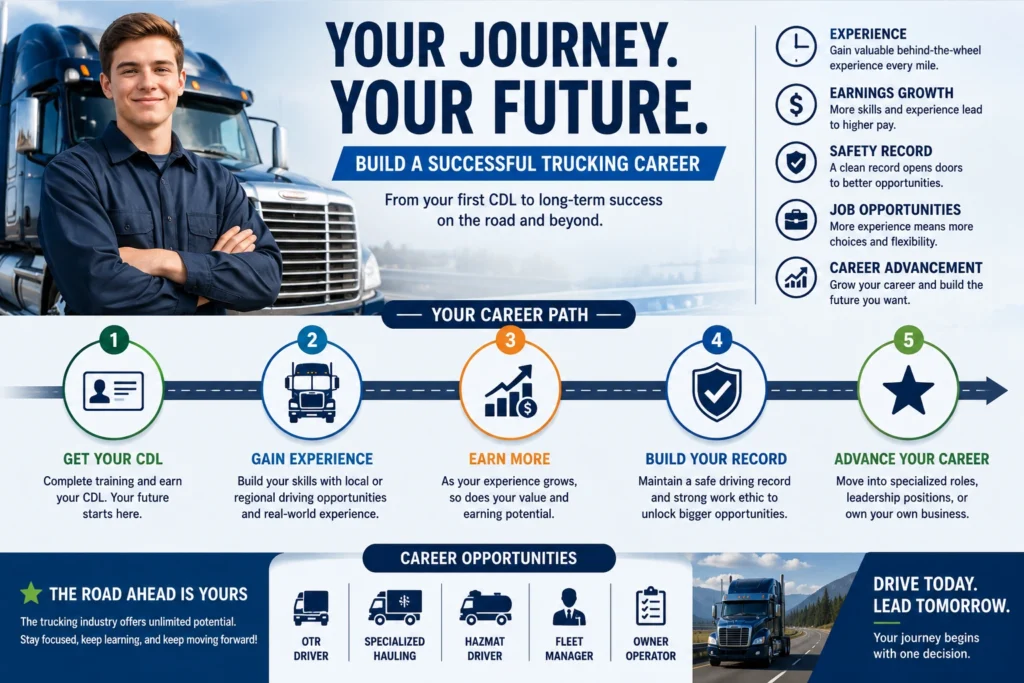
There are many advantages to becoming a truck driver at 18, especially for individuals eager to start a career immediately after high school.
Start Building Experience Early
Experience is one of the most valuable assets in the trucking industry.
Starting at 18 allows drivers to:
- Develop professional driving skills
- Learn industry regulations
- Build confidence behind the wheel
- Create a strong employment history
Potential for Higher Lifetime Earnings
Beginning a trucking career earlier may lead to greater earning potential over time.
Drivers who accumulate experience before age 21 may qualify for:
- Higher-paying routes
- Specialized positions
- Leadership opportunities
- Advanced endorsements
Build a Strong Safety Record
Safety is critical in commercial transportation.
Young drivers who focus on:
- Defensive driving
- Compliance
- Vehicle maintenance awareness
can establish a strong reputation that benefits them throughout their careers.
Gain Industry Knowledge
Early exposure to the trucking industry provides valuable insights into:
- Freight operations
- Logistics systems
- Customer service
- Route planning
This knowledge can create additional career opportunities in the future.
Challenges of Becoming a Truck Driver at 18
While there are many benefits, young drivers should also understand potential challenges.
Limited Job Opportunities
Because interstate driving is typically restricted until age 21, some trucking positions may not be available immediately.
However, many local opportunities still exist for motivated drivers.
Additional Training Requirements
Commercial driving requires dedication and continuous learning.
Drivers must understand:
- Federal regulations
- State laws
- Safety procedures
- Vehicle inspection requirements
Professional training plays an important role in preparing new drivers for success.
Competition for Entry-Level Positions
Some local trucking jobs attract many applicants.
Standing out may require:
- Strong training credentials
- Clean driving records
- Professional attitude
- Excellent work ethic
Fortunately, employers often value motivated young drivers who demonstrate responsibility and commitment.
How to Prepare for a Successful Truck Driving Career Before Turning 21
Young drivers can take several steps to maximize their future opportunities.
Maintain a Clean Driving Record
Traffic violations can affect future employment prospects.
Drivers should focus on:
- Following traffic laws
- Avoiding distracted driving
- Practicing defensive driving habits
Stay Physically Healthy
Commercial drivers must meet medical standards.
Healthy habits may include:
- Regular exercise
- Balanced nutrition
- Adequate sleep
- Routine medical checkups
Avoid Violations and Substance Abuse
Safety compliance is essential for every CDL holder.
Maintaining a clean record demonstrates professionalism and responsibility.
Gain Valuable Local Experience
Local driving positions help young drivers build:
- Road experience
- Industry knowledge
- Confidence
- Employer references
These benefits can make the transition to interstate driving much smoother after turning 21.
Choosing the Right CDL Training Program at 18
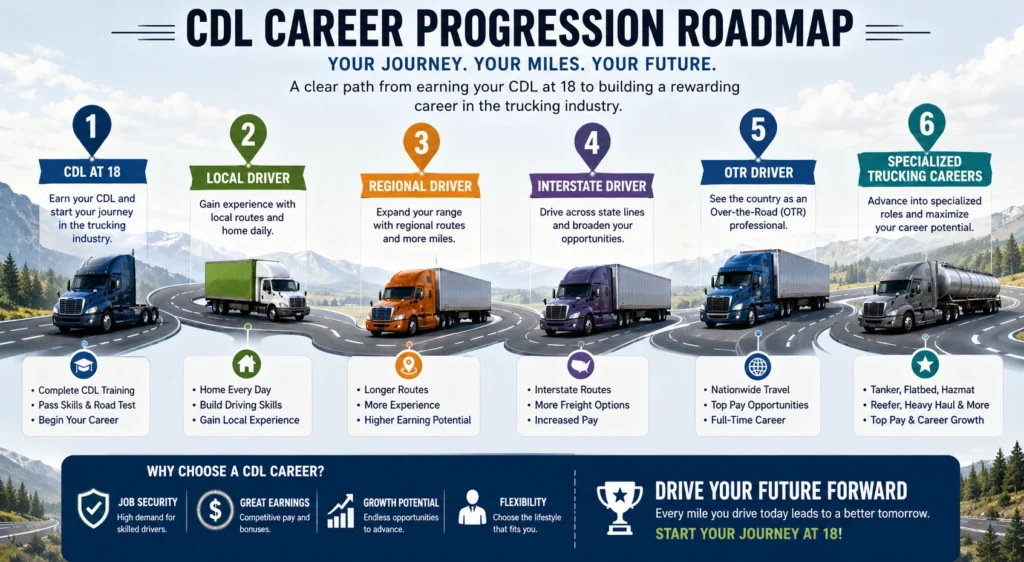
The quality of your training can significantly influence your future success.
What to Look for in a CDL School
A reputable CDL training program should offer:
- Experienced instructors
- Modern equipment
- Hands-on training
- Safety-focused curriculum
- Career support services
Questions to Ask Before Enrolling
Before selecting a school, consider asking:
- What is the training duration?
- How much driving time is included?
- Are job placement resources available?
- What endorsements can students pursue?
How CDL Training Helps Young Drivers Succeed
Professional training provides:
- Practical driving skills
- Knowledge of regulations
- Confidence for CDL testing
- Preparation for real-world trucking environments
For anyone wondering can you get a CDL at 18, quality training is often the first step toward a successful career.
Career Paths Available After Turning 21
Turning 21 opens the door to additional opportunities within the trucking industry.
Interstate Truck Driving
Drivers can pursue routes that cross state lines and serve customers nationwide.
Over-the-Road (OTR) Trucking
OTR positions often offer:
- Extensive travel
- Diverse routes
- Competitive compensation
- Career growth opportunities
Specialized Trucking Careers
Experienced drivers may eventually qualify for specialized sectors such as:
- Refrigerated freight
- Flatbed transportation
- Tanker operations
- Dedicated freight services
These roles often provide increased responsibility and earning potential.
Frequently Asked Questions
Can you get a CDL at 18 in most states?
Yes. Many states allow qualified individuals to obtain a CDL at age 18 for intrastate commercial driving.
How old do you have to be to get your CDL for interstate trucking?
While you can earn a CDL earlier, interstate commercial driving generally requires drivers to be at least 21 years old.
Can 18 year old drive a truck across state lines?
In most situations, drivers under 21 are limited to intrastate operations and cannot perform interstate trucking.
Conclusion
So, can you get a CDL at 18? In many states, the answer is yes. Earning your CDL at a young age allows you to gain valuable experience, develop professional skills, and begin building a rewarding trucking career. While certain restrictions apply until age 21, there are still numerous opportunities for motivated individuals who are interested in becoming a truck driver at 18.
Whether you’re asking how old do you have to be to get your CDL, can you get your CDL at 18, or can 18 year old drive a truck, the key is to understand the requirements, complete quality training, and focus on developing safe driving habits. With dedication and the right preparation, you can position yourself for long-term success in the trucking industry and take the first step toward a promising future behind the wheel.