A Class B CDL lets you operate single vehicles weighing 26,001 pounds or more, including box trucks, dump trucks, buses, and cement mixers. Professional Class B CDL training prepares you for the written and skills exams, meets federal ELDT requirements, and helps you land stable, well-paying jobs faster than studying on your own.
The demand for commercial drivers keeps climbing. Delivery companies, school districts, construction firms, and city transit systems all need qualified drivers, and many can’t fill positions fast enough. That gap creates a real opportunity for anyone willing to earn a commercial driver’s license.
A Class B CDL is one of the most practical career credentials you can earn. It opens doors to dozens of jobs, often pays well, and doesn’t require a four-year degree. Better yet, many Class B roles let you stay close to home instead of spending weeks on the road.
This guide walks you through everything you need to know before enrolling in a Class B CDL course. You’ll learn what the license covers, what training involves, how much it costs, how long it takes, and what careers await once you’re certified. We’ll also cover how to choose the right school and prepare for your exams.
At Road Masters Academy, we’re committed to professional CDL education that prepares drivers for real careers—not just a passing test score. Let’s get started.
What Is a Class B CDL?
Understanding the Basics of a Class B CDL
A Commercial Driver’s License (CDL) is a special license required to operate large or heavy vehicles for work. The federal government sets the rules, and each state issues the license.
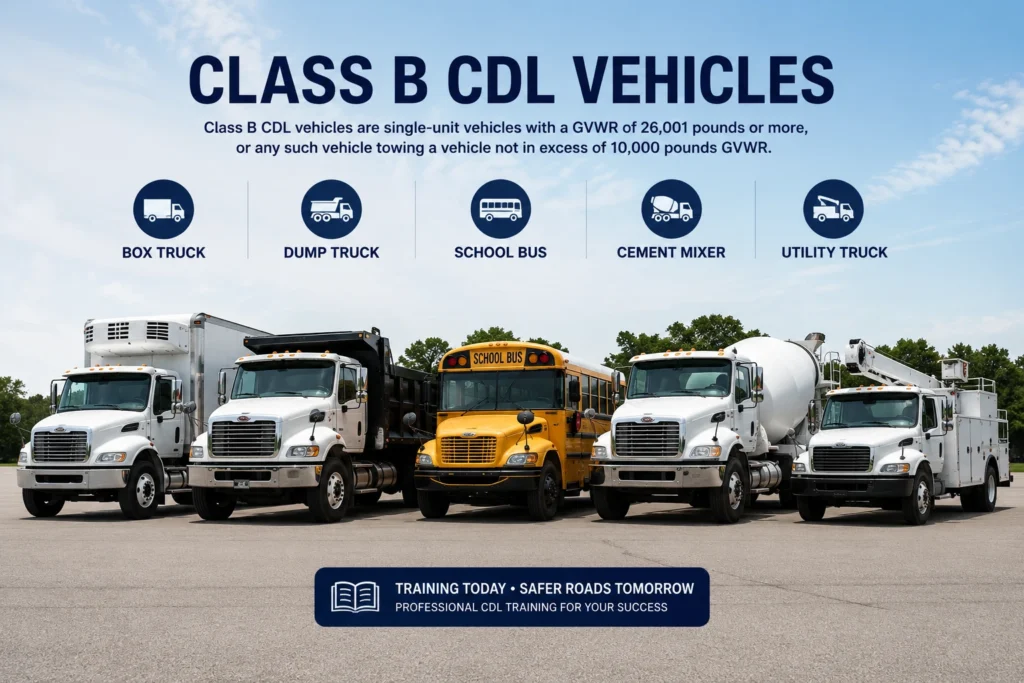
A Class B CDL specifically covers single vehicles with a gross vehicle weight rating (GVWR) of 26,001 pounds or more. It also covers towing a trailer that weighs 10,000 pounds or less. The key word is “single”—Class B is built around one large vehicle rather than a truck pulling a heavy trailer.
Vehicles You Can Operate With a Class B CDL
A Class B CDL qualifies you to drive a wide range of vehicles, including:
- Straight trucks used for freight and delivery
- Box trucks common in retail and moving services
- Dump trucks used across construction sites
- Cement mixers for concrete delivery
- School buses (with the proper endorsement)
- Passenger buses for transit and charter routes
- Utility vehicles for municipal and service work
With the right endorsements, your options expand even further.
Class A vs. Class B CDL: What’s the Difference?
The main difference comes down to vehicle combinations. A Class A CDL covers combination vehicles—think tractor-trailers and big rigs that tow trailers over 10,000 pounds. A Class B CDL focuses on single heavy vehicles.
Here’s how they compare:
- License requirements: Both require a learner’s permit, training, and exams, but Class A skills tests involve coupling and uncoupling trailers.
- Vehicle types: Class A drivers handle semis and tankers; Class B drivers handle box trucks, dump trucks, and buses.
- Career opportunities: Class A often means long-haul trucking; Class B usually means local and regional work.
- Salary considerations: Class A drivers may earn more on long routes, but Class B drivers enjoy steadier hours and more home time.
Choose Class B if staying local and keeping regular hours matters more to you than maximizing mileage pay.
Why Class B CDL Training Matters
The Importance of Professional Class B CDL Training
You can’t simply read a manual and expect to pass. Professional training gives you three things that self-study can’t:
- Safety training that teaches you to handle heavy vehicles in real traffic
- CDL exam preparation focused on both written and skills tests
- Hands-on driving experience under the guidance of qualified instructors
These elements build the habits that keep you—and everyone around you—safe on the road.
Benefits of Enrolling in a Structured CDL Training Class B Program
A structured program does more than help you pass. It builds confidence behind the wheel, since repeated practice removes the fear of maneuvering a large vehicle. It delivers real industry knowledge, from logbook rules to inspection procedures. And it leads to better employment opportunities, because employers trust graduates who learned the right way from the start.
Why Employers Prefer Professionally Trained Drivers
Employers want drivers who reduce risk. A professionally trained driver already understands safety protocols, vehicle inspections, and compliance rules. That means less time spent on remedial training and fewer accidents on the job. For many companies, completing a recognized program is the difference between getting an interview and getting passed over. If you’re searching for professional CDL Training Brownsville TX, look for a program that emphasizes hands-on instruction.
Who Should Consider a Class B CDL Course?
Career Changers Looking for Stable Employment
If you want a stable income without going back to college for years, a Class B CDL offers a fast track. Many programs take weeks, not semesters, and demand for drivers stays high.
Recent High School Graduates
A Class B CDL gives new graduates a clear path to a paying career. Instead of taking on student debt, they can earn a credential and start working quickly.
Construction and Utility Workers
Workers already in construction or utilities can boost their value by adding a Class B CDL. Operating dump trucks, mixers, or utility vehicles often comes with higher pay.
Public Transportation and School Bus Drivers
School districts and transit agencies constantly need bus drivers. A Class B CDL with a passenger or school bus endorsement opens these reliable, community-focused jobs.
Requirements Before Starting a Class B CDL Course
Minimum Age Requirements
You typically must be at least 18 to drive within your state and 21 to drive across state lines or transport hazardous materials. Always check your state’s specific rules.
Driver’s License Requirements
You’ll need a valid regular driver’s license before applying for a commercial learner’s permit. A clean driving record helps with both training and future employment.
Medical Examination Requirements
Commercial drivers must pass a DOT physical performed by a certified medical examiner. This exam confirms you’re physically able to operate a heavy vehicle safely.
Commercial Learner’s Permit (CLP)
Before you can train behind the wheel on public roads, you need a Commercial Learner’s Permit. You earn it by passing the written knowledge tests for your license class.
Documents You’ll Need
Come prepared with proof of identity, proof of residency, your Social Security information, your current driver’s license, and your DOT medical certificate. Requirements vary slightly by state.
What You’ll Learn During Class B CDL Training
Classroom Instruction
Federal and State Regulations
You’ll study the rules that govern commercial driving, from licensing standards to weight limits and traffic laws specific to large vehicles.
Vehicle Safety Procedures
Training covers how to keep your vehicle road-ready, including pre-trip checks and how to respond when something goes wrong.
Hours of Service Rules
You’ll learn the federal limits on driving time, required rest breaks, and how to record your hours correctly to stay compliant.
Defensive Driving Techniques
Classroom lessons teach you to anticipate hazards, manage following distance, and react safely to other drivers.
Behind-the-Wheel Training
Vehicle Inspection Procedures
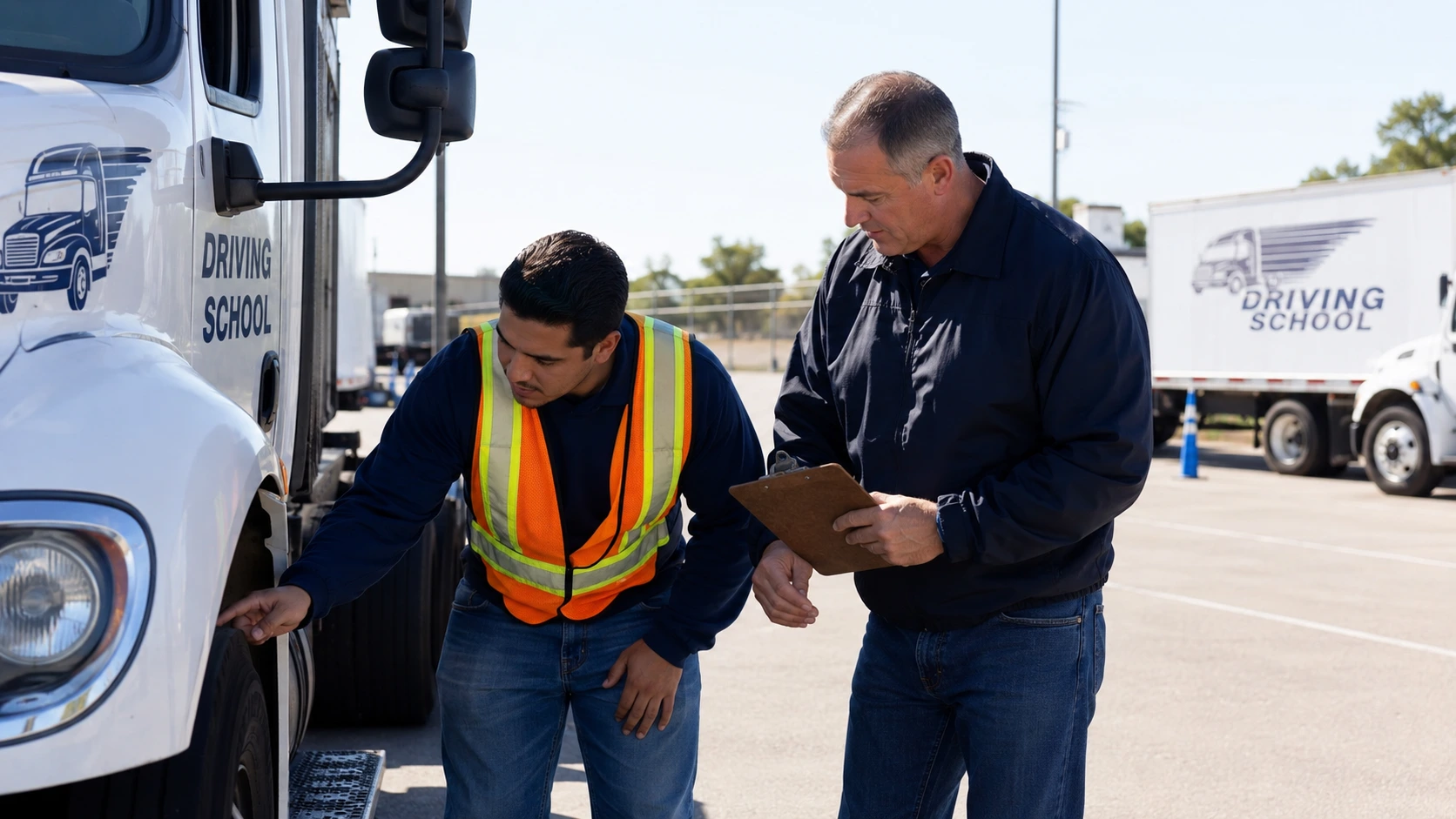
You’ll practice the pre-trip inspection, a required part of the skills test and a daily habit for working drivers.
Basic Vehicle Control
This covers starting, stopping, steering, and shifting—the core skills for controlling a heavy vehicle smoothly.
Backing and Parking Maneuvers
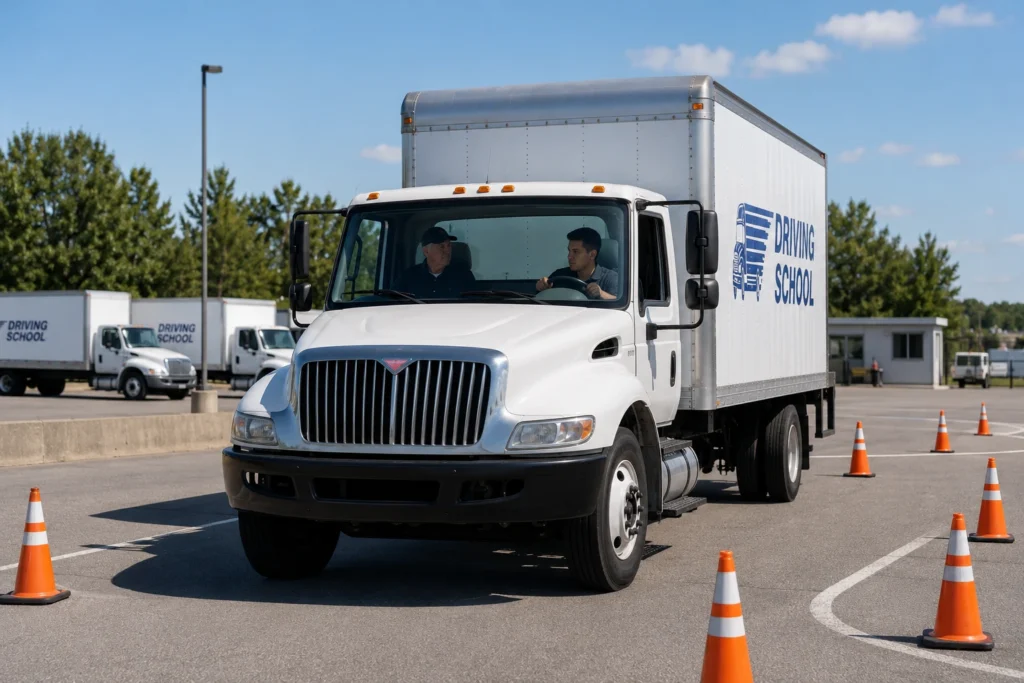
Backing a large vehicle takes practice. Training includes straight-line backing, offset backing, and parallel parking in a controlled setting.
Road Driving Skills
You’ll drive in real traffic, practicing lane changes, turns, intersections, and merging until it feels natural.
ELDT Compliance and Modern CDL Education
Since February 2022, all new CDL applicants must complete Entry-Level Driver Training (ELDT) from a provider listed on the federal Training Provider Registry. Modern CDL education programs build their curriculum around these standards, so your training counts toward certification. Reputable CDL education programs in Texas follow ELDT rules closely.
How Long Does Class B CDL Training Take?
Full-Time CDL Programs
Full-time programs are the fastest route. Many students finish in three to seven weeks of intensive daily instruction.
Part-Time CDL Programs
Part-time options let you keep your current job while you train. These programs run on evenings or weekends and may take a few months to complete.
Factors That Affect Training Duration
Your timeline depends on the schedule you choose, how quickly you master backing maneuvers, your state’s testing availability, and any endorsements you pursue. Personal practice time also speeds things up.
How Much Does a Class B CDL Course Cost?
Average Tuition Costs
Tuition for a Class B CDL course generally falls in the lower range of CDL programs, since Class B requires fewer skills than Class A. Prices vary by school, location, and program length.
Additional Expenses to Consider
Beyond tuition, budget for these common costs:
- Permit fees for your Commercial Learner’s Permit
- DOT physical with a certified medical examiner
- Testing fees for written and skills exams
- Endorsements like passenger or school bus add-ons
Financial Aid Options
Many schools offer payment plans, scholarships, or grants. Workforce development programs and veterans’ benefits may also help cover costs.
Employer-Sponsored CDL Programs
Some companies pay for your training in exchange for a work commitment. This route can make your CDL essentially free while guaranteeing a job at the end. Exploring local trucking career training opportunities can help you find sponsored options.
How to Choose the Best Class B CDL Schools
Accreditation and ELDT Compliance
Confirm the school appears on the federal Training Provider Registry. Without ELDT compliance, your training won’t count toward certification.
Instructor Experience
Look for instructors with real-world driving and teaching experience. Skilled teachers make complex maneuvers easier to learn.
Training Equipment and Facilities
Modern, well-maintained vehicles and a dedicated practice area give you better preparation for the skills test and the job.
Student-to-Instructor Ratios
Smaller classes mean more individual attention and more time behind the wheel. Ask how many students share each instructor and vehicle.
Job Placement Assistance
Strong schools maintain relationships with employers and help graduates find work. Ask about their placement support before you enroll.
Graduate Success Rates
A reputable school will share its pass rates and graduate outcomes. High numbers signal effective training. When comparing a leading CDL School Brownsville TX, ask about both pass rates and job placement. A trusted Texas CDL Institute Brownsville should be transparent about results.
Preparing for the CDL Class B Practice Test
What Is Covered on the CDL Class B Practice Test?
General Knowledge Section
This section tests core topics like vehicle control, safe driving, and basic regulations every commercial driver must know.
Air Brakes Section
If your vehicle has air brakes, you’ll need to pass this section, which covers how the system works and how to inspect it.
Passenger Endorsement Topics
Planning to drive a bus? The passenger endorsement covers loading, unloading, and the safe transport of riders.
School Bus Endorsement Topics
This endorsement adds rules specific to student safety, including loading zones, railroad crossings, and emergency procedures.
Best Study Methods
Use your state’s official CDL manual as your foundation. Pair it with a CDL Class B practice test, study a little each day, and review the questions you miss until they stick.
Common Test-Day Mistakes
Many test-takers rush, skip the air brakes section, or forget to study endorsement material. Arriving tired or unprepared also leads to avoidable errors.
Tips to Pass on Your First Attempt
Get a full night’s sleep, arrive early, read each question carefully, and don’t second-guess answers you know. Consistent practice beats last-minute cramming every time.
Understanding the Class B CDL Certification Process
Step 1: Obtain Your Commercial Learner’s Permit
Pass the written knowledge tests to earn your CLP. This permit lets you practice driving with a qualified CDL holder.
Step 2: Complete Class B CDL Training
Enroll in an ELDT-compliant program to build your skills and meet the federal training requirement.
Step 3: Pass Written Knowledge Exams
Complete any remaining written tests for your license class and chosen endorsements.
Step 4: Complete the Skills Test
The skills test has three parts: the vehicle inspection, basic control maneuvers, and the on-road driving exam.
Step 5: Receive Your Class B CDL Certification
Pass every section, pay your licensing fees, and your state issues your Class B CDL certification. You’re ready to work.
Career Opportunities After Earning a Class B CDL
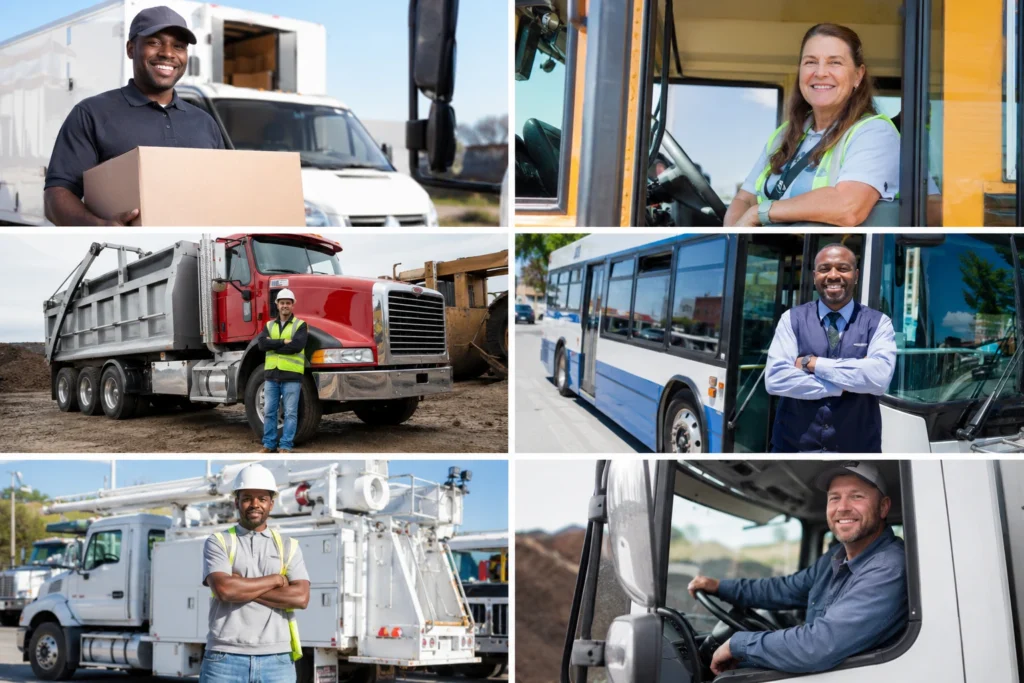
Delivery Truck Driver
Local delivery drivers move goods for retailers, distributors, and freight companies—often with home time every night.
School Bus Driver
School bus drivers enjoy a set schedule, community connection, and benefits that often come with district employment.
Public Transit Bus Operator
Transit operators keep cities moving. These jobs typically offer stable hours, union protections, and solid benefits.
Dump Truck Driver
Dump truck drivers are essential to construction, hauling materials to and from job sites across the region.
Utility Vehicle Operator
Utility operators support water, power, and municipal services using specialized Class B vehicles.
Waste Collection Driver
Waste collection offers steady, recession-resistant work, since communities always need reliable sanitation services.
Construction Industry Opportunities
A Class B CDL pairs naturally with construction work, letting you operate mixers, dump trucks, and other heavy vehicles on site.
Expected Salary for Class B CDL Drivers
Entry-Level Earnings
New Class B drivers earn a solid starting wage, especially in high-demand sectors like waste collection and construction.
Experienced Driver Salaries
With a few years of experience and a clean record, your earning power grows. Specialized roles and endorsements push wages higher.
Factors That Affect Income
Several factors shape your paycheck:
- Location: Pay varies widely by region and cost of living.
- Endorsements: Extra qualifications open higher-paying roles.
- Experience: Seasoned drivers command better wages.
- Industry: Specialized sectors often pay more than general delivery.
Why Students Choose Road Masters Academy for CDL Training
Experienced Instructors
Our instructors bring years of real-world driving knowledge to every lesson, so you learn from people who’ve done the job.
Hands-On CDL Training
We prioritize time behind the wheel. You’ll practice the exact maneuvers your skills test and your career demand.
Modern Equipment
Training on well-maintained, up-to-date vehicles prepares you for the trucks and buses you’ll drive professionally.
Career-Focused Education
Everything we teach points toward a real job. Our curriculum reflects what employers actually need from new drivers.
Commitment to Student Success
From your first class to your job search, we support you at every step. Your success is how we measure ours.
Start Your CDL Journey With Professional Training
Earning a Class B CDL is one of the smartest career moves available right now. It’s affordable, fast to complete, and leads to stable work across delivery, construction, transit, and more. The credential pays for itself quickly and keeps you in demand.
The school you choose makes all the difference. A program with experienced instructors, modern equipment, ELDT compliance, and strong job placement sets you up to pass your exams and launch a lasting career. Take the time to compare your options and ask the right questions before you enroll.
If you’re ready to begin, there’s no better time to start. Road Masters Academy is here to help you earn your Class B CDL and drive toward a brighter future—one mile at a time.
Frequently Asked Questions
How much does Class B CDL training cost?
Costs vary by school, location, and program length, but Class B tuition usually sits at the lower end of CDL pricing because it requires fewer skills than Class A. Remember to budget for permit fees, your DOT physical, testing fees, and any endorsements. Financial aid and employer sponsorship can reduce or eliminate these costs.
How long does it take to get a Class B CDL?
Full-time programs often take three to seven weeks. Part-time programs that fit around a job can take a few months. Your final timeline depends on your schedule, how fast you master backing maneuvers, and your state’s testing availability.
What’s the difference between a Class A and Class B CDL?
A Class A CDL covers combination vehicles like tractor-trailers that tow heavy trailers. A Class B CDL covers single heavy vehicles such as box trucks, dump trucks, and buses. Class A often means long-haul work, while Class B usually means local routes with more home time.
Do I need a permit before starting Class B CDL training?
Yes. You must earn a Commercial Learner’s Permit (CLP) by passing the written knowledge tests before you can train behind the wheel on public roads. You’ll also need a valid driver’s license and a DOT medical certificate.
What jobs can I get with a Class B CDL?
A Class B CDL qualifies you for delivery driving, school bus and transit operation, dump truck driving, utility vehicle operation, waste collection, and various construction roles. With the right endorsements, your options expand even further.
Is Class B CDL training worth it?
For most people, yes. Professional training meets federal ELDT requirements, prepares you for both exams, and signals to employers that you learned the right way. Graduates of structured programs typically find work faster and with better pay than those who study alone.